Night Vision Museum
Forty years of image intensifier technology. The gear that changed how wars are fought — and what it took to build it.
Night vision didn't start with a Gen 3 PVS-14. It started in 1939 with an active infrared device the size of a suitcase that needed a dedicated IR searchlight to work. The technology evolved through four decades of military investment, tube manufacturing breakthroughs, and hard lessons from Vietnam, Panama, and the Gulf — and the result is the Gen 3 image intensifier that defines modern night operations.
Adams Industries has been in and around this technology since 1993. Over that time, we've accumulated a collection of devices, documentation, and components that represent the full arc of image intensifier development — from first-generation starlight scopes to modern autogated Gen 3 tubes. This is that collection.
Looking to buy rather than browse? See our current Gen 3 image intensifier tubes for sale.
The museum is a working reference, not a display case. Every device here was operational at some point. Some still are.
By Company
Manufacturer archives — ads, catalogs, and product photography organized by company.
Litton Industries: 1980s-1990s Night Vision Goggles
One of the primary US image intensifier tube and NVG manufacturers from the 1960s through the 1990s. The ads below run from 1979 to 1988; the tri-fold brochure is from the 1990s.

Jan 1979 · Revue Internationale de Défense

Apr 1985 · Internationale Wehrrevue

Sep 1986 · Revue de Défense

Mar 1988 · Military Technology

c. 1990s · Tri-Fold Brochure · Page 1

c. 1990s · Tri-Fold Brochure · Page 2

c. 1990s · Tri-Fold Brochure · Page 3

c. 1990s · Tri-Fold Brochure · Page 4

c. 1990s · Tri-Fold Brochure · Page 5

c. 1990s · Tri-Fold Brochure · Page 6
ITT
Major US government contractor and image intensifier tube manufacturer.

1983 · Revue de Défense
Varo
Texas-based manufacturer of image intensifier tubes and night vision equipment.

Oct 1988 · Military Technology
STANO Components
1999 catalog and product photography.

Catalog · Page 1

Catalog · Page 2

Catalog · Page 3

Catalog · Page 4

Catalog · Page 5

Catalog · Page 6

Catalog · Page 7

AN/PAS-6 · 1
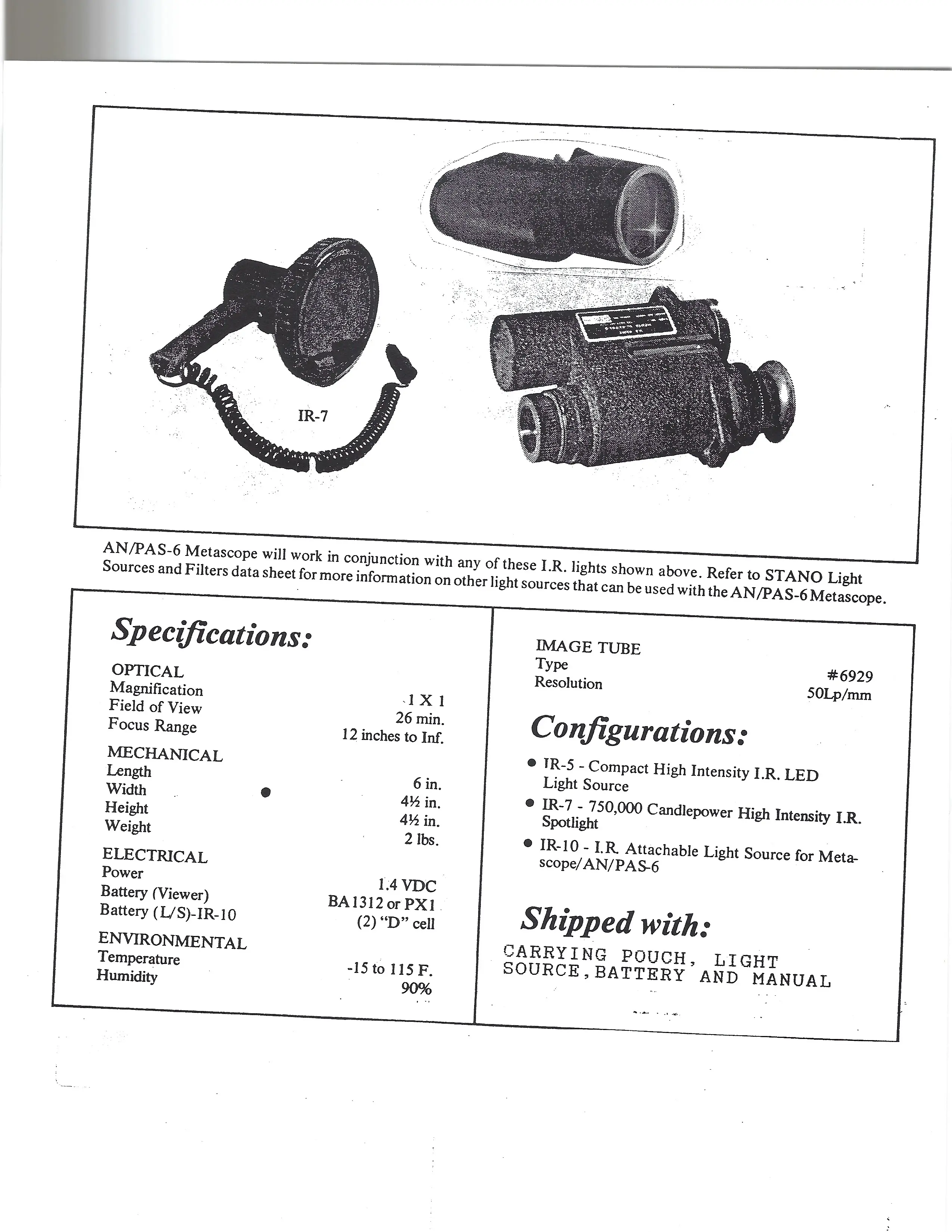
AN/PAS-6 · 2

AN/PVS-4 · 1

AN/PVS-4 · 2

AN/PVS-700 · 1

AN/PVS-700 · 2

AN/PVS-7B

AN/TVS-2A · 1

AN/TVS-2A · 2

AN/TVS-2B · 1

AN/TVS-2B · 2

IR Lights · 1

IR Lights · 2

M-18

Night Explorer · 1

Night Explorer · 2

Night Patriot · 1

Night Patriot · 2

Nite Guard · 1
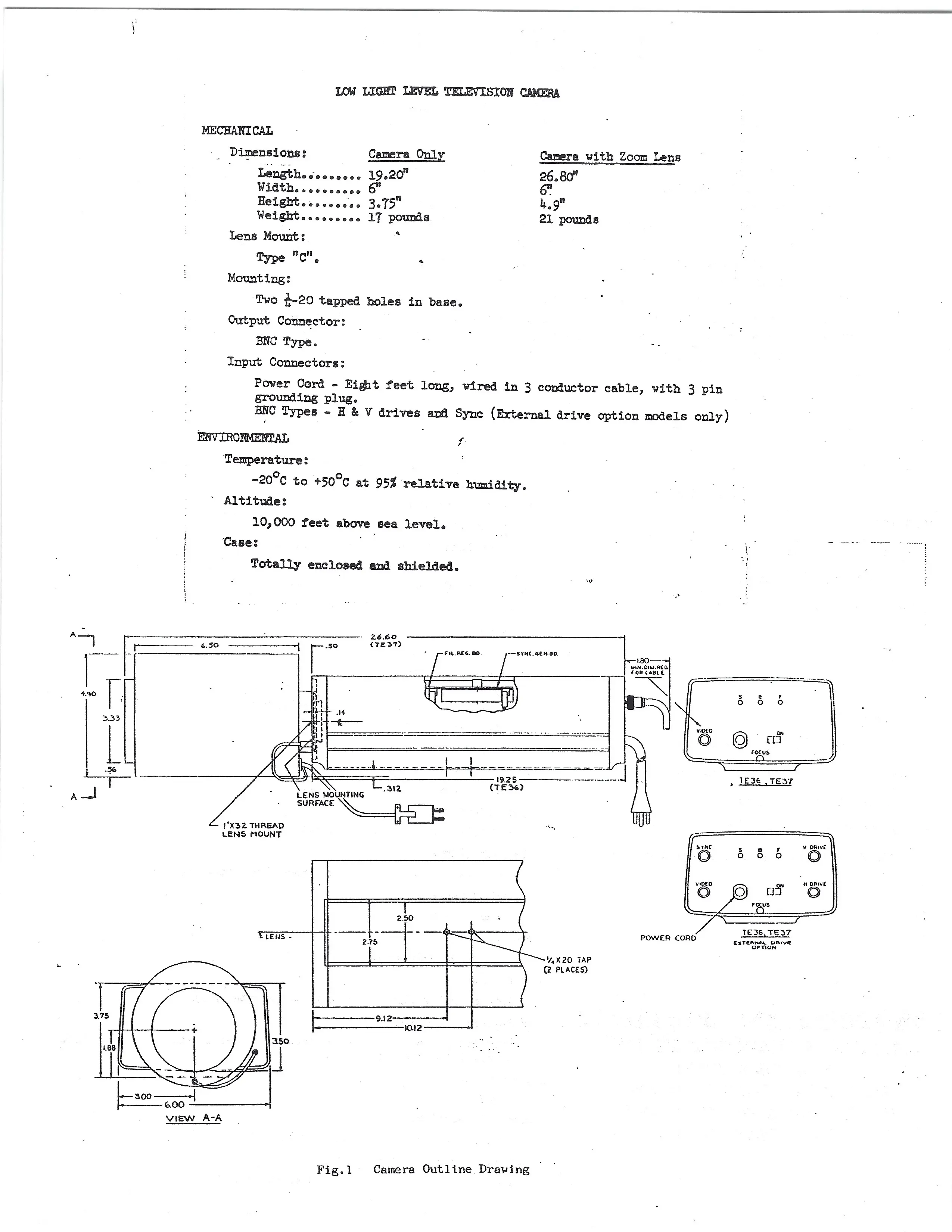
Nite Guard · 2

NVG-500 · 1

NVG-500 · 2

RCA NV Camera · 1

RCA NV Camera · 2

SCPAS-100 · 1

SCPAS-100 · 2

SC-PVS-300 · 1

SC-PVS-300 · 2
R&R Research
1999 product brochure.

1999 · Brochure
L3 Technologies
Major defense electronics manufacturer; successor to several legacy NV tube producers.

2011 · ALA Magazine
Adams Industries
Historical Adams Industries advertising and sponsorship material.

Aug 7, 2006 · Infantry Bugler

2006 · ADS Advertisement

2006 · ADS Catalog Ad
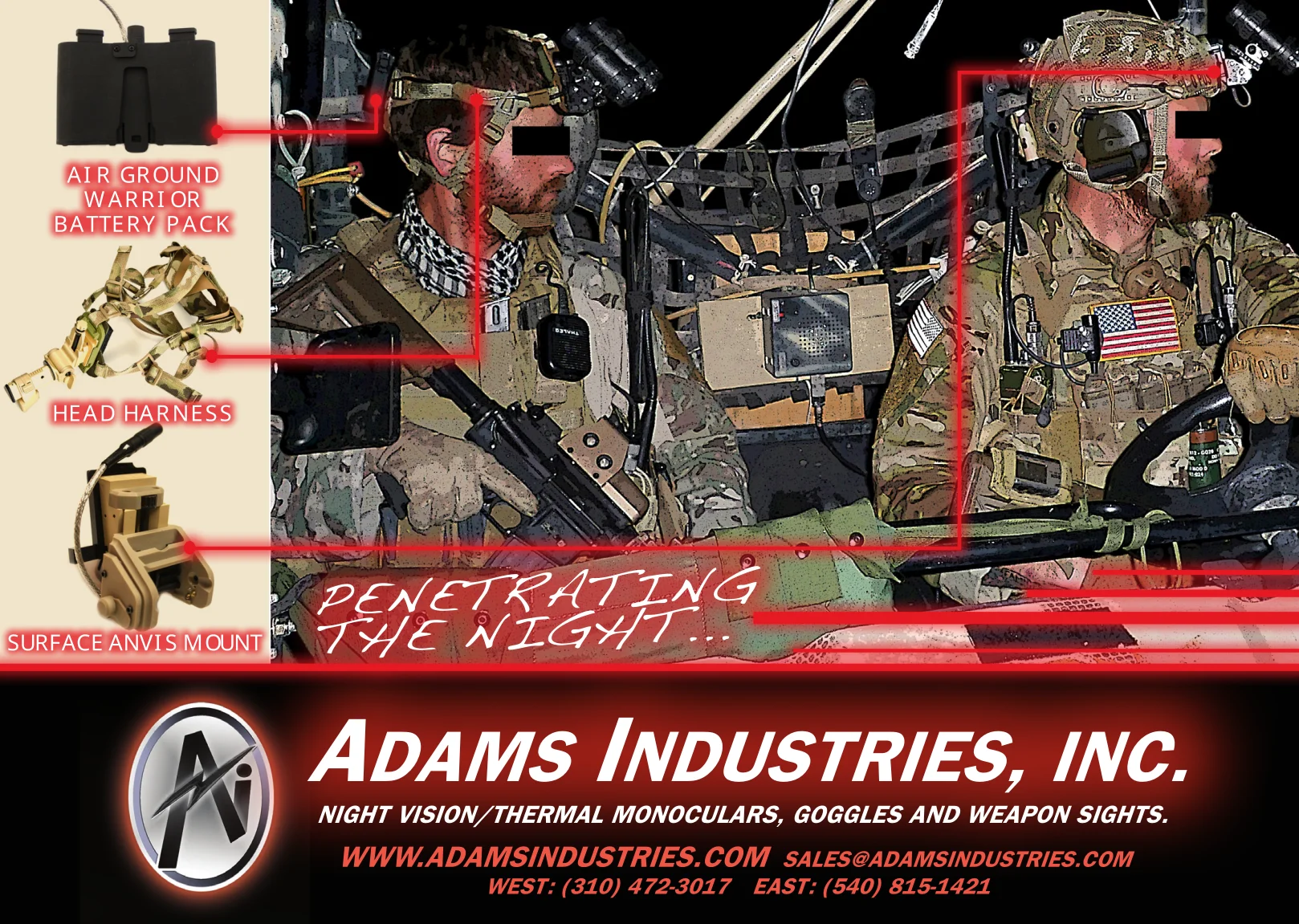
Jun 26, 2012 · SOTECH Magazine

2012 · Unknown Publication

Nov 13, 2012 · USCG Sponsorship

Aug 30, 2013 · Night Vision Guide
All Ads — Chronological
Every advertisement in the archive, all companies, sorted by date.
Litton · Jan 1979 · Revue Internationale de Défense
ITT · 1983 · Revue de Défense
Litton · Apr 1985 · Internationale Wehrrevue
Litton · Sep 1986 · Revue de Défense
Litton · Mar 1988 · Military Technology
Varo · Oct 1988 · Military Technology
Adams Industries · Aug 7, 2006 · Infantry Bugler
Adams Industries · 2006 · ADS Advertisement
Adams Industries · 2006 · ADS Catalog Ad
L3 · 2011 · ALA Magazine
Adams Industries · Jun 26, 2012 · SOTECH Magazine
Adams Industries · 2012 · Unknown Publication
Adams Industries · Nov 13, 2012 · USCG Sponsorship
Adams Industries · Aug 30, 2013 · Night Vision Guide
Technology Timeline
The key inflection points in 60 years of image intensifier development.
- 1939 Germany fields the first active IR night vision device — Zielgerät 1229 "Vampir" — using an IR searchlight and a bulky image converter tube. Range: ~100m.
- 1963 US Army fields the AN/PVS-2 Starlight Scope in Vietnam. First passive Gen 1 device in combat service. No IR searchlight required.
- 1970 Microchannel plate (MCP) technology developed — enables Gen 2. Eliminates cascade tubes, reduces size and weight by 50%.
- 1978 AN/PVS-5 fielded — first widely issued binocular NVG for US infantry. Gen 2 tubes, head-mounted, hands-free.
- 1987 Gallium arsenide photocathode enters production — Gen 3 technology. 2–3× sensitivity improvement over Gen 2 in near-IR spectrum. ITT and Litton begin US government production.
- 1991 Desert Storm — Gen 3 night vision gives Coalition forces decisive advantage. Iraqi forces, mostly Gen 1 equipped, cannot see Coalition forces who can see them. The phrase "We own the night" enters the vocabulary.
- 2000 AN/PVS-14 fielded — replaces PVS-7 as the US military standard. Modular, monocular, weapons-compatible. Becomes the global standard for military NVGs.
- 2010s White phosphor screens introduced. Autogating becomes standard. Thin-film anti-reflective coatings improve image quality. Filmless tubes enter testing.
- 2020s Fusion technology matures — thermal + image intensifier overlay. ENVG-B (Enhanced Night Vision Goggle-Binocular) enters US Army service. Digital NVGs emerge as a parallel development path.